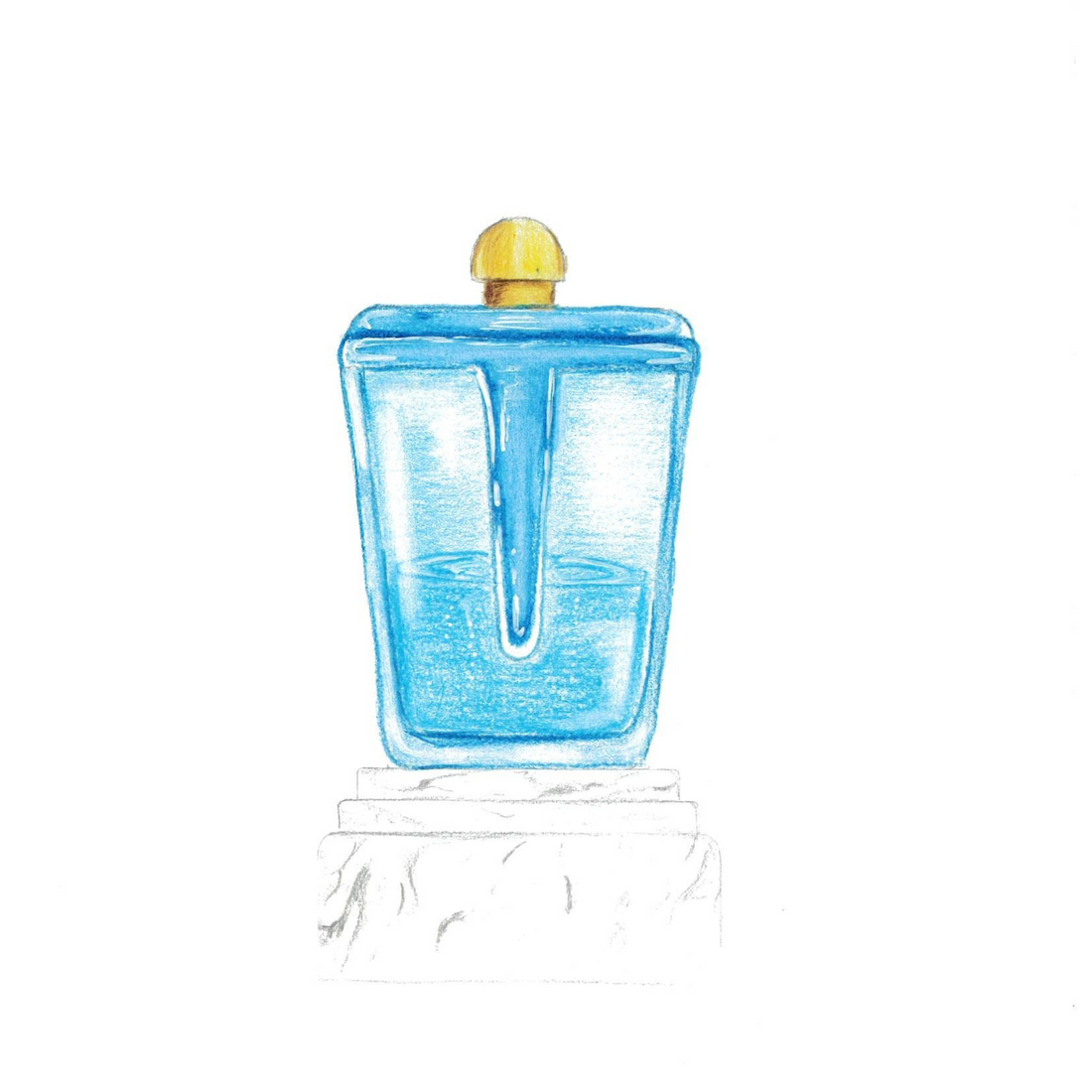
Something resists today’s creative decay, the unyielding technicality that the eye absorbs and reworks with every glance; something remains that still knows how to cross into the bounds of the most uncontaminated emotionality, inviting us, from the standpoint of perceptual psychology, to keep clear the childlike vision through which to observe the world. Amid the vast selection of doses in which every sort of pain is sold to us, an unusual visual narrative makes its way, one that in its unassuming approach carries the power to move and to heal. The illustrations of Benito Fiola (@benito.illustrator), in their ecstatic naturalness, manage to restore a sense of childlike wonder to the observer’s eyes.
Illustrations of an undergrowth of melancholic, dreaming, timeless creatures that, with every brushstroke, embody a universally accessible sentimental dictionary. Fragility, dreaming, the defenceless necessity to exist in all one’s own splendid smallness makes Benito’s watercolour illustrations a symbol that goes beyond the figure; his creations appear as a reminder to recalibrate the sense of the measured and the radiant that is capable of existing in every declination of being; far from the booming digital celebrations of a hollow, inherited, unmotivated and often mystified grandeur. Admiring his illustrations is therapy for the spirit, against the excess of negative stimuli, it is the destruction of those behavioural codes based on haste, aggression, the omnipresent visual self-centredness from which we suffer and to which we increasingly want to conform, nullifying every hypothetical message, provided it knows how to renew itself identically within its own emptiness.
Can illustrations heal? Yes. Neurodesign has a duty to instruct the observer on the dangers the eye encounters when sifting through sets of lines and colours devoid of meaning. The dimension of discretion, of being enough, of resisting, silent and patient, before the jolts, is the promise Benito manages to keep; portraiture that, like the illustrations made entirely by hand, restores authority to the exclusively human capacity to place in what is created more than a response in volumes and tones, but rather a burning subset of stimuli to be protected for every observer, from a universally human hand to a humanly universal eye.